
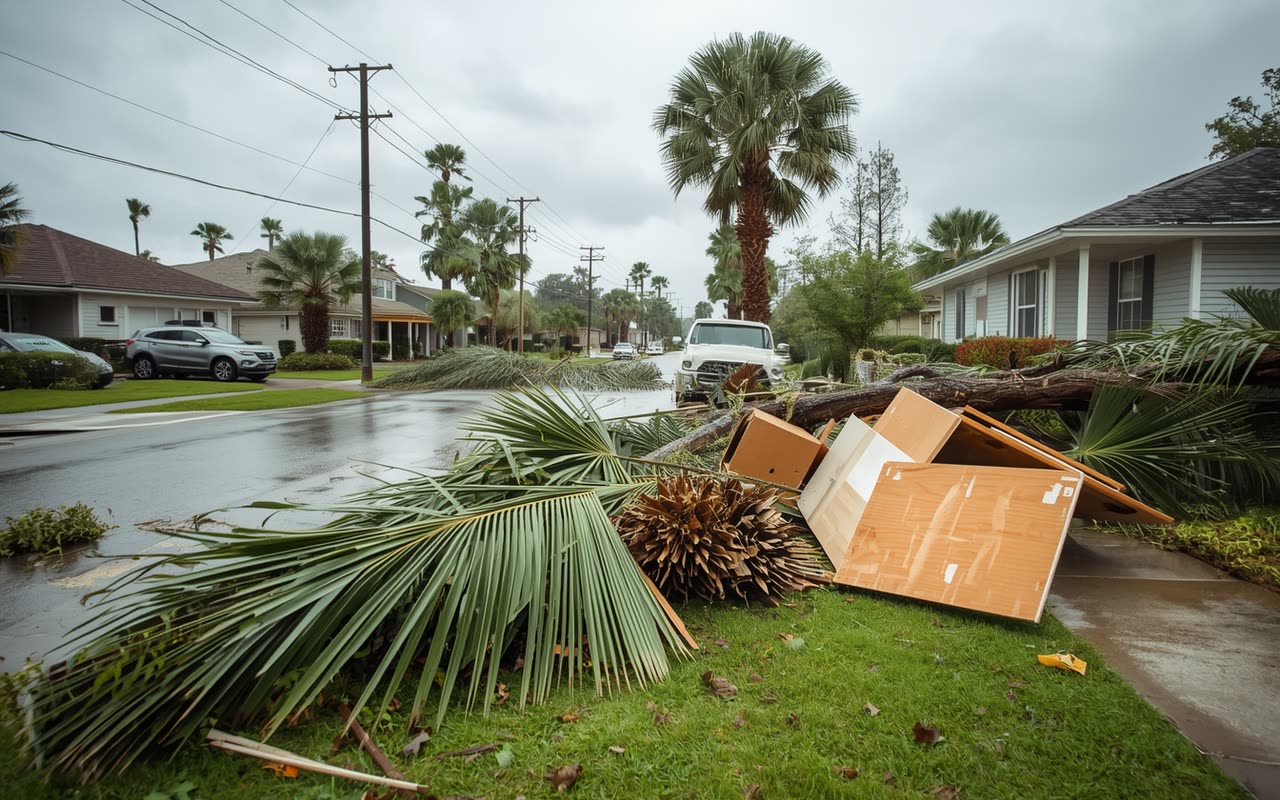
The storm is not what grows mold. The week after it is. Tampa Bay in hurricane season is warm and wet before a storm arrives, and after one the power is often out, the AC is off, the walls are soaked and the air outside is as wet as the air inside. Those are close to perfect conditions for mold, and in this climate mold can start on wet materials in about 24 to 48 hours.
This guide is a plan you can follow in order. It assumes the worst case, no power and a lot of water, and you can skip the steps that do not apply. If your house took water, also read about flood damage restoration, since floodwater is contaminated and changes what you can keep.
Before anything else: is it safe?
Day 0, the first hour after the storm passes.
- Wait for the all clear. Stay out of the house until local officials say your area is safe to return to. Roads can be washed out, trees and power lines can be down, and water can still be rising along rivers and canals after the rain stops.
- Look from the outside first. Check for a sagging roofline, leaning walls, a shifted foundation or a collapsed lanai. If you see any of it, do not go in.
- Treat every downed line as live. Stay far away and report it to the utility.
- Smell for gas. If you smell it, leave and call from a safe distance.
- Do not walk into a wet house with power on. If water reached outlets or the panel, the power should be shut off at the meter by the utility or an electrician before you wade in.
- Wear the right gear. Waterproof boots, gloves, eye protection and an N95 respirator. Floodwater can carry sewage and bacteria.
Power, generators and carbon monoxide
Outages after a Tampa Bay storm can last for days. A generator helps, but it is also one of the most dangerous things people do after a storm.
- Run it outside only. Never in the house, garage, carport with walls, or on the lanai. Keep it well away from windows, doors and vents, because exhaust can drift back inside.
- Use a carbon monoxide alarm with battery backup in the house, and leave at once if it sounds or if anyone feels dizzy, sick or has a headache.
- Do not backfeed. Plugging a generator into a wall outlet can send power back out the line and hurt utility workers. Use proper transfer equipment or run cords directly to what you need.
- Keep fuel safe. Store it outside, away from heat, and let a hot generator cool before refilling.
- Prioritize. A refrigerator, a few fans, a dehumidifier or a window AC unit are worth more than lights for the drying effort. If you only have power for one thing and you have wet walls, a dehumidifier is a strong choice.
Day 1: document, then start water out
Photograph first, quickly. Take wide and close pictures of the damage, the waterline on walls and anything you plan to throw out. This is the evidence for any claim, and it takes ten minutes. If you have flood insurance, remember that standard homeowner policies generally do not cover flood, and NFIP policies generally have a 30-day waiting period, so check what you have. Call your insurer and ask how to file.
Then move to the real work. The sequence is:
- Stop new water. Cover roof openings with tarps (see the roof section below), close up broken windows and doors, and turn off the water supply if a pipe is damaged.
- Get standing water out. Small amounts can go with a wet vacuum or mop. Deeper water is a job for pumps, and you pump gradually if it is high around the foundation, since removing it all at once can stress walls and floors.
- Remove what holds water. Pull up soaked carpet and pad, remove wet baseboards, and lift loose items off the floor. Carpet in floodwater generally goes.
- Get air and dehumidification moving. More on this below, because the usual advice to open windows does not work well here.
If you can move things out of the house to dry in the sun, do. Put furniture on blocks or foil so legs do not stain floors, and take photos before items go to the curb.
What to throw out
After a hurricane with flooding, the rule is simple: porous things that touched floodwater generally go.
- Drywall and insulation that got wet. Floodwater wicks above the line you can see. These are removed in a flood cut.
- Carpet, pad and rugs that sat in floodwater.
- Mattresses, pillows, upholstered furniture and stuffed toys.
- Food and medicine that touched floodwater, plus refrigerated food when the power has been out for long. Check food safety guidance and throw out anything in doubt.
- Particleboard furniture and cabinets that swelled.
- Anything with visible mold that cannot be fully dried and treated.
Things that may be saved: solid wood furniture, hard plastic, glass, metal, sealed ceramic, and framing lumber, after drying and treatment. If it came from rain through the roof instead of floodwater, the rules are less strict, but wet drywall and insulation that stay wet more than a day or two still need to come out.
The 24 to 48 hour mold window
This is the reason for the speed. In Florida humidity, mold spores that are always in the air land on wet materials, and the growth begins in about a day or two. The window is a rule of thumb, not a switch, but it shapes the plan:
- Within 24 hours: get standing water out, remove soaked porous materials, and start moving air and pulling humidity down.
- By 48 hours: wet drywall, baseboards and the backs of furniture start to show growth if they are still wet.
- By 72 hours and beyond: growth spreads, the musty smell sets in, and what could have been dried may now need removal.
Mold grows on moisture. Take away the moisture quickly and you can often prevent most of it. That is why drying is the work that matters most, not the spraying or wiping people reach for.
Drying a house with no power
The usual advice to open windows and run fans assumes you have power and dry outdoor air. After a Tampa Bay storm you may have neither. What works:
- Open windows only when the outdoor air is drier than the indoor air. After a storm, outdoor air is often as wet as indoor air. Opening up lets in moisture instead of drying. A better time is a breezy, sunny afternoon after the rain has passed.
- Get the water out of materials, not just off them. Removing wet carpet, pad and drywall does more than any fan.
- Use whatever power you have for a dehumidifier. A small generator can run a dehumidifier and a fan or two. Place the dehumidifier in the most affected room with doors closed to the rest of the house.
- Use cross-ventilation and sun. Take wet furniture, rugs and boards outside to dry in the sun. Prop open cabinets and closet doors. Remove drawers.
- Open wall cavities. Pulling baseboards and cutting drywall to the dry line lets the framing dry. A closed wall holds moisture for weeks.
- Move things off the floor. Lift furniture legs out of puddles and take down wet items from walls.
- Wait to turn on the AC. If the AC has power but took water, or its ducts were wet, have it checked first. Running a system with wet ducts can spread contamination and mold through the house.
When to bring in help
You can handle a small, clearly limited problem yourself: a dry, hard surface with a small patch of mold, about 10 square feet or less, with an N95 respirator, gloves and eye protection. A hurricane or flood is rarely that. Call a specialist when:
- Floodwater (Category 3) entered the house.
- Water covered more than a room or two, or sat for more than a day.
- Water got into walls, insulation, the slab edge or the ceiling.
- You see or smell mold in more than a small area.
- Anyone in the house has asthma, a weakened immune system or breathing problems.
- Power is out and you cannot dry the house yourself.
- You are unsure what is wet and what is dry.
After a major storm, specialists are busy. Call early, give your address and what you know, and keep doing what you safely can in the meantime. See mold removal and water damage restoration for what a proper job involves.
What mold looks like
Mold is not always dramatic. Look for:
- Fuzzy or powdery patches in white, gray, green, black or brown.
- Dark speckles on drywall, ceilings, grout and wood.
- Spots on the backs of furniture and on the lower few inches of walls.
- A musty, earthy smell even when you cannot see growth.
- Peeling or bubbling paint and stains that spread.
- Warped or cupped flooring.
Do not assume black means dangerous and white means harmless. Color does not tell you much. What matters is how much, where, and whether the moisture is gone. Visible mold rarely needs a lab to confirm it. If you want sampling for your own reasons, Florida regulates mold assessors separately from remediators, so that would be a different business from a remediation company.
Roof leaks that arrive with the storm
A storm that did not flood your street can still soak your house from above. Tile roofs lose pieces, shingles lift, flashing bends, and a fallen limb can open a hole.
- Get to the ceiling first. Look at ceilings and attic access for stains, sagging or drips. A bulging ceiling holds water, and a small hole carefully poked in the lowest point can release it into a bucket, with someone standing clear of the area.
- Photograph before you tarp.
- Tarp the roof or hire someone to. Do not climb a wet roof after a storm. Falls are a leading cause of injury after hurricanes. A roofer or specialist can do an emergency tarp.
- Remove wet insulation. Wet attic insulation holds water against the ceiling and grows mold above your head.
- Check the attic. Mold in the attic is common after a roof leak, and you may not know until the smell shows up.
- Keep records. Wind-driven rain through a damaged roof is typically a different claim from floodwater rising from the ground.
Week by week
Days 1 to 3: Safety, power, documenting, water out, wet porous materials out, dehumidification started, roof tarped.
Days 4 to 7: Specialist visit if you have not had one, structure opened and drying equipment in place, readings taken daily. Sort and discard. Keep photographing. Watch for mold on anything still damp, especially in closets and behind furniture.
Week 2: Drying continues until readings match dry areas of the house. Treat any mold found. Do not close walls or install new flooring until moisture readings say the structure is dry. Ask your city or county about permits and any "substantial damage" rules before you rebuild.
Weeks 3 and 4: Rebuild begins once everything is verified dry. Continue to watch humidity in the house, keep it below about 60 percent, and look for new spots. A musty smell that returns after the drying means a hidden damp area.
The plan on one page
- Stay out until it is safe. Power off if wet.
- Generators outside only.
- Photograph everything.
- Stop new water: tarp, close up.
- Pump and extract standing water.
- Remove wet carpet, pad, drywall and insulation where floodwater touched it.
- Dehumidify. Do not rely on open windows.
- Discard porous items that sat in floodwater.
- Call a specialist for anything beyond a small area.
- Do not rebuild until readings show dry.
For the same plan for a single burst pipe or leak, see the first 24 hours after water damage.