
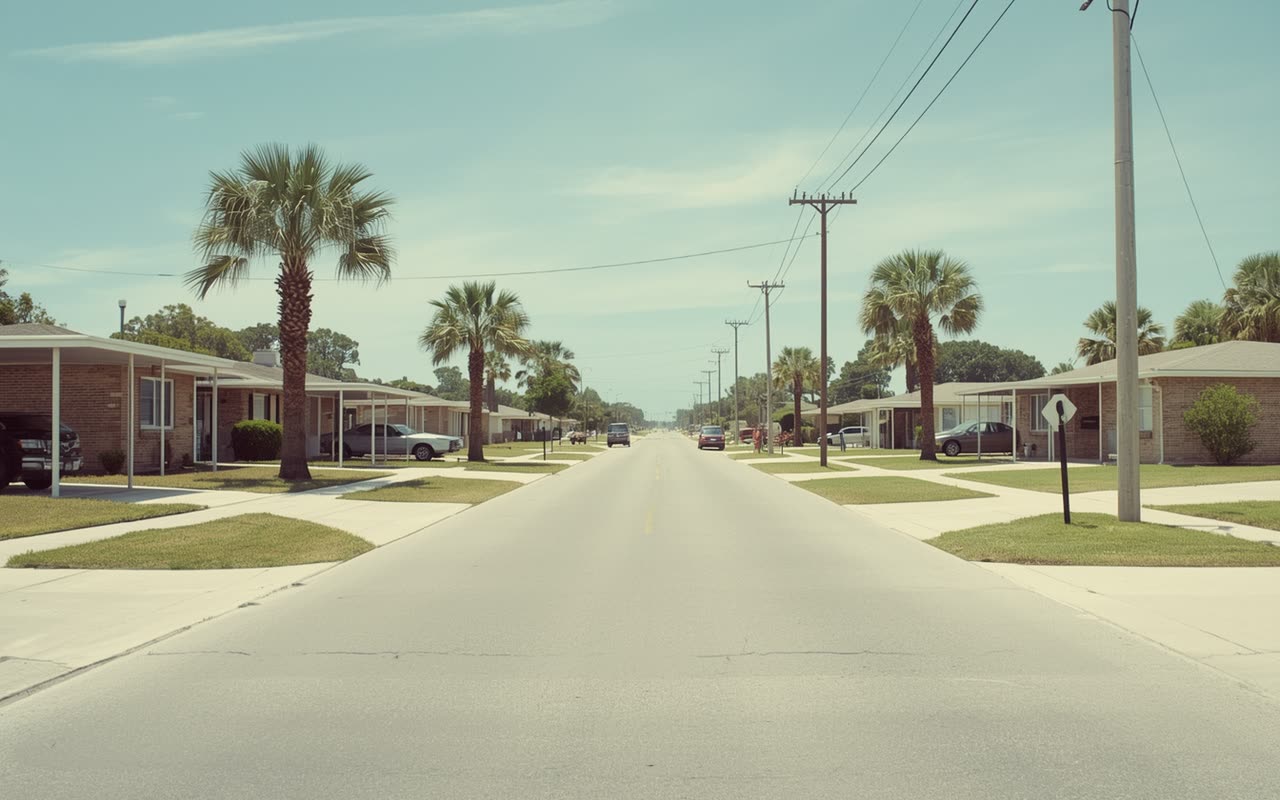
Largo sits in the middle of Pinellas County, away from the open water, and most of its homes were built during the decades when Florida filled up quickly. Drive through a typical neighborhood and you will see the same type again and again: a single-story concrete block ranch house on a slab, often with a carport or a garage, a low roofline and an ample backyard. Many were built between the 1960s and the 1980s.
Those houses are durable, but fifty or sixty years is a long time for plumbing, roofing and appliances. Most of the water damage in this part of the county comes from a failing part at home, not from the bay.
Reading a ranch house on a slab
A slab-on-grade home has no crawl space and no basement. The floor is poured concrete, often covered with tile, vinyl or carpet. The walls are block, sometimes with stucco outside and plaster or drywall inside.
When a pipe leaks, the water can only go sideways. It seeps into the bottom of a wall, wicks up the drywall, soaks the baseboard and flows under flooring. Because there is nothing below to catch it, the damage is often hidden at the wall base first. A stain that reaches knee height on a wall is usually a sign that water has been sitting there for a while.
If you are comparing this to older raised-floor homes elsewhere in the county, the St. Petersburg page covers that other building type.
The garage and the water heater
In many Largo homes, the water heater lives in the garage or a utility closet, and so does the washing machine. That puts the most failure-prone appliances in one place, usually in a room that nobody visits every day.
A tank that has been in place for ten or fifteen years can rust through at the bottom and release the full contents, tens of gallons, across the floor and into the adjacent rooms. The water runs under the wall between the garage and the house and soaks the carpet or flooring on the other side. Signs to watch for are rust streaks on the tank, a damp spot on the slab, a drip from the relief valve line and a growing puddle that returns after you wipe it up.
Similar story for washing machine supply hoses: the rubber ones can fail suddenly, and a hose that bursts while no one is home can run for hours. The first minutes of a burst are laid out under burst pipe water damage, and emergency water removal is the page for water that is already standing.
Older plumbing
Houses from this era may have copper supply lines, which can develop pinholes over time, or in some cases galvanized pipe that corrodes from the inside. Cast iron drain lines can crack or separate at joints. None of this is a certainty for any individual home, but a plumber's camera or a simple look at the pipes under the sinks will tell you what you have.
Seasonal residents and houses left closed
Largo has many retirement communities, mobile and manufactured home parks, and neighborhoods where owners spend the summer up north. When a house sits closed from May to October, a few things happen:
- The thermostat is set high to save power, and indoor humidity climbs.
- Nobody notices a small drip until it has been running for weeks.
- A tripped breaker or a power outage can shut the air conditioning off entirely.
- A slow drain line from the air handler can overflow into a closet with no one there to catch it.
Mold can spread widely through a shut house in a few weeks, and the first sign is often the smell when the owner opens the door in the fall. If you leave your house for the summer, a neighbor or property manager who checks inside every couple of weeks, with a quick look at the ceiling near the air handler and under the sinks, can head off most of this.
Inland flooding and drainage
Largo is not on the beach, but it is not immune from flooding. Heavy rain, especially a slow-moving storm that dumps rain for hours, can overwhelm storm drains and fill low yards and streets. Many lots here are flat with little natural slope, so water that does not soak in tends to pool against the house.
Look at how your yard drains. Do downspouts discharge right at the foundation? Is soil piled up against the stucco? Does the driveway slope toward the garage door? Small fixes, such as extensions on downspouts and grading that slopes away from the walls, can keep water from creeping under a garage door or through a block wall.
If water has already entered, flood damage restoration describes how a flooded slab house is dried and what typically has to be removed. Flood is typically excluded from ordinary homeowner coverage, and a flood policy through NFIP needs about 30 days before it starts. Find your flood zone with the county or city before the next storm, not after.
Where mold usually appears in a Largo ranch
- Along the bottom of walls after a slow leak or a flood, behind baseboards.
- Inside the garage-side wall shared with the water heater or washer.
- Ceilings below a roof leak, often near vent stacks.
- The air handler closet, where a clogged drain line leaves a damp floor.
- Bathroom ceilings and walls where an exhaust fan only vents into the attic.
- Closed-up spare rooms with the door shut and the vents blocked.
A visible spot on a hard surface, about ten square feet at most, is something EPA guidance says an owner can often manage in an N95, gloves and safety glasses. When you cannot see the whole problem, a mold inspection finds where the water is, using readings from a moisture meter. If the growth is widespread, mold removal is the next step.
Close by
The beaches and condos of Clearwater are a short drive north and west, and our home page covers Tampa across the bay.
Who this page helps
If you own a ranch house in Largo, rent in one, manage a seasonal property or are helping a parent with a house that has been closed all summer, this page is meant for you. When you do find water, call rather than hoping the house dries itself.