
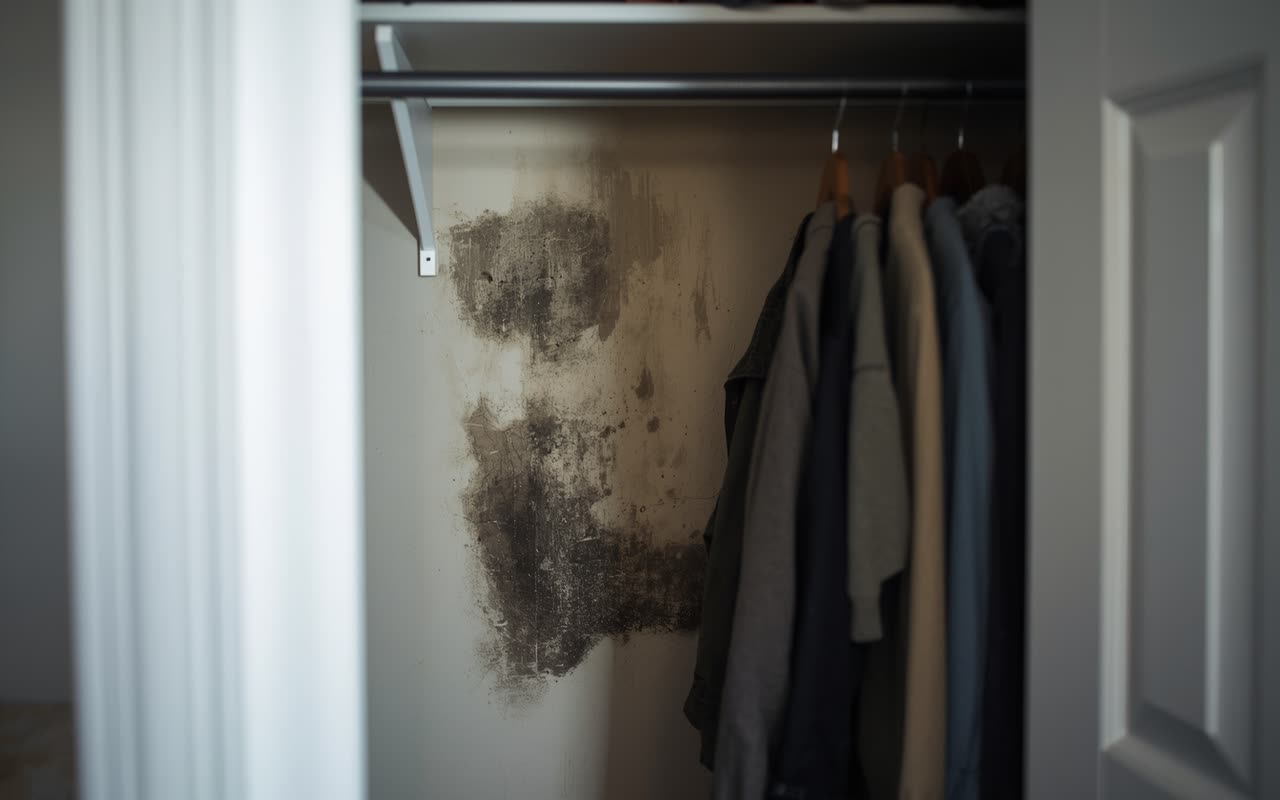
Plenty of the mold calls in this area have no leak behind them. There is no pipe, no roof problem, no flood. The house is simply too damp for too long. A closet wall turns dark, a bathroom ceiling spots over, the air smells like a basement in a state with almost no basements. The cause is humidity, and humidity is the one thing Tampa Bay has plenty of.
This guide explains how indoor moisture works in a Florida house, what to measure, and a routine that prevents most of it.
How humidity works in a Tampa Bay house
Air holds water vapor. Warm air holds more than cool air, which is why a Florida summer feels thick. Relative humidity is how full the air is compared with what it could hold at that temperature. At 90 degrees and 70 percent humidity, there is a lot of water in every cubic foot of air outside your door.
Mold needs three things: spores (always present), a food source (drywall paper, wood, dust, fabric), and moisture. You cannot remove the first two from a house. You can control the third.
The trouble is that air moves between inside and outside all the time, through gaps around doors and windows, attic penetrations, open doors, exhaust fans and the AC system. When the outdoor air is wet, and it often is, that moisture comes in. If the inside surface is cooler than the dew point of the room air, water condenses on it, on a cold supply register, an exterior wall behind a dresser, a window frame or a chilled duct. Condensation is liquid water, and mold lives on it.
The number to aim for
The EPA suggests keeping indoor relative humidity between 30 and 60 percent. Many Florida homes need to stay under about 60, and a target of roughly 40 to 55 percent is comfortable and keeps mold from getting started. Above 60 percent for long stretches, surfaces start to hold enough moisture for growth, especially in cool corners and closed closets.
Do not expect to hit the same number every hour. Humidity swings during the day. What matters is the pattern: if your home reads above 60 percent most of the day for days at a time, you have a problem to fix.
What a hygrometer tells you
A hygrometer is a small, inexpensive gauge that reads relative humidity and usually temperature. It is the single most useful tool a Florida homeowner can own.
- Buy two or three. Place one in the main living area, one in the bedroom and one in a problem spot like a closet, bathroom or the room that smells.
- Check at different times. Morning, afternoon and after showers or cooking show you the swings.
- Look at trends. A reading that is high in one room and normal in others points to a local cause, like a leak, a blocked vent or a closed-off space.
- Do not trust one cheap gauge blindly. Two gauges side by side tell you whether one is drifting. A moisture meter, used by specialists, reads the material itself, and it is a different measurement from air humidity.
If your hygrometers read above 60 percent for days, even with the AC on, look at the AC.
Your AC is a dehumidifier
An air conditioner cools air by passing it over a cold coil. As the air cools, water condenses on the coil and drains away. That is how an AC dries your house. This only works when the system runs long enough for the air to pass over the coil many times.
Oversized AC and short-cycling. An oversized system cools the house quickly and shuts off before it has run long enough to pull out much moisture. The house feels cool and clammy, with a humidity reading in the high 60s or 70s. Signs of short-cycling: the system turns on and off every few minutes, the house is cold but sticky, and the thermostat is satisfied but you still feel damp. A sizing problem is fixed by an HVAC professional, not a restoration company, though some systems can be adjusted with variable speed settings or paired with a whole-home dehumidifier.
Thermostat fan setting. The fan setting matters more than most people think.
- Auto runs the fan only when the system is cooling. This is generally the right choice for humidity control.
- On runs the fan constantly, including after the cooling cycle stops. The coil is wet at that point, and the fan can blow that moisture back into the house. In humid climates, constant fan mode often raises indoor humidity.
- Temperature. Setting the thermostat much higher while you are away, such as 85 or higher, lets humidity climb and mold begin. Many people leave it a few degrees higher, not a lot higher, for summer trips.
Condensate drain lines
An AC removes water, and that water must go somewhere. A small drain line carries it from the air handler to a drain or outside. These lines clog with algae, slime and debris, and when they do, water backs up and overflows.
- What you see: a wet ceiling below an attic air handler, water in the drain pan, a stain on a closet wall or ceiling, a musty smell near the air handler, or a unit that stops cooling because a float switch trips.
- What to do: have an HVAC technician flush the line, and ask whether a float switch is installed. Some people flush the line on a regular schedule.
- Do not ignore a small stain. A slow overflow can soak insulation and ceiling drywall for weeks before it shows. That is a common hidden cause of mold in Florida attics and closets. If you find damage, see water damage restoration.
Ceiling vents and ducts that sweat
When cold air runs through ducts in a hot attic, the outside of the duct can get cold enough for attic air to condense on it. The same thing happens at the supply vent in the ceiling.
- Sweating vents: water droplets or dark rings around supply registers, often in a bedroom or hallway.
- Causes: torn or missing duct insulation, ducts not sealed, gaps around the vent boot, high humidity in the attic or house, and a thermostat set very cold.
- Fixes: repair or replace duct insulation, seal the boot to the ceiling, reduce humidity, and avoid running the house very cold for long stretches.
Dark streaks around a vent are often dust sticking to a damp surface, but they can also be mold, so look closely before wiping.
Closets, exterior walls and furniture against walls
Mold in Florida homes often shows up in the same few spots:
- Back corners of closets, where air does not move and the exterior wall is cool.
- Behind beds, dressers and sofas pushed flush against an exterior wall.
- Shoes, bags, leather and cardboard boxes stored in a closed closet.
- The bottom of drywall near sliding doors, where lanai humidity enters.
Fixes: pull furniture a few inches away from exterior walls, keep closet doors cracked or use louvered doors, do not pack closets tight, store items off the floor, and keep an eye on the closet with a hygrometer. A small dehumidifier, or a closet product that pulls moisture, can help in a trouble spot, though it will not solve an overall humidity problem.
Vinyl wallpaper and wall coverings
Vinyl wallpaper acts like a plastic bag on the wall. On an exterior wall in a humid climate, moisture can pass through the drywall and get trapped behind the vinyl, where mold grows out of sight. Signs are bubbling, peeling seams, a musty smell and dark spots at the seams. If you see them, a specialist can check the wall with a moisture meter and thermal camera before it is removed.
Closed-up seasonal and vacant homes
Snowbird homes, rentals between tenants and vacant houses are mold magnets. With the AC off or set high and no one living there, humidity rises and nothing moves the air.
- Keep the AC on, set to a reasonable temperature, not off. A thermostat in the high 70s to low 80s is a common compromise for an empty house.
- Consider a whole-home or room dehumidifier with a drain line, so it runs without anyone emptying a bucket.
- Ask someone to check in. A neighbor, a property manager or a service. Look for leaks, drain pan overflow, spots and smell. A wet ceiling noticed in a week is minor. In two months, it can be a big job.
- Shut off the main water when leaving for a long trip, if you can, to limit damage from a supply line failure.
- Leave interior doors open so air can circulate.
- Remove food, trash and damp items. Leave the refrigerator door propped open if it is off.
Dehumidifiers versus the AC
Both pull moisture, but they do it differently.
- The AC removes moisture as a byproduct of cooling. It does not do much when it is off, when it is short-cycling, or on mild humid days when it rarely runs.
- A dehumidifier pulls moisture without needing to cool the house. It is useful on rainy days with mild temperatures, in vacant homes, in a lanai-adjacent room or in a closet area.
- Sizing and drains. A portable unit needs emptying unless you run a hose to a drain. A whole-home unit ties into the ducts.
If your AC is working properly and the house still reads above 60 percent, a dehumidifier is a reasonable addition. If the AC is short-cycling, fixing that comes first.
Bathroom, kitchen and dryer exhaust
Showers, cooking and laundry put gallons of water into the air.
- Bathroom fan: run it during the shower and for 20 to 30 minutes after. It should vent outside, not into the attic. If the fan is quiet and weak, the duct may be disconnected or blocked. Hold a tissue under it to see if it pulls.
- Kitchen range hood: vent it outside, and use it when boiling or frying.
- Dryer vent: the dryer should exhaust outside through a rigid or semi-rigid duct, not into the attic or garage. A disconnected or crushed dryer duct pumps wet air into the walls.
- Bathroom and kitchen cabinets: check under sinks for slow leaks. A damp cabinet floor is a common start for mold.
Lanai doors and sliding glass doors
Lanais are outdoors with a roof, and the sliding door between the lanai and the house is a humidity gateway. If the door sits open for hours, or the weatherstripping is worn, humid air flows in. Watch for water at the bottom track after storms, soft or dark drywall at the baseboard beside the door, and condensation on the glass in the morning. Keep the door closed in the heat of the day, replace worn seals, and keep the track drain clear.
A monthly routine
Ten minutes a month saves a lot of trouble.
- Check hygrometers. Write down the readings. Anything above 60 percent for days needs attention.
- Look at the AC drain line and drain pan if you can reach them, or ask your HVAC company to.
- Look at ceilings, corners and under sinks for stains.
- Smell closets and bathrooms.
- Change the AC filter on schedule. A dirty filter reduces airflow and can freeze the coil.
- Test bathroom fans with a tissue.
- Pull furniture from exterior walls and look behind.
- Check windows and doors for condensation and worn seals.
Before you leave for the summer
- Set the AC to run, not off.
- Run a dehumidifier with a drain if you have one.
- Have the AC drain line flushed.
- Turn off the water at the main.
- Open closet doors and interior doors.
- Remove perishable items and trash.
- Ask someone to check in every week or two.
- Put a hygrometer in the main room and ask the person checking to read it.
When a musty smell means a hidden problem
A musty smell is often the first sign. Humidity alone can cause a faint smell in a closet, but a smell that is strong, spreads, or returns after you air the room out points to something hidden: a leak inside a wall, a wet ceiling above the drywall, a drain line overflow, wet insulation or growth behind wallpaper or cabinets.
Look for these clues:
- A smell strongest in one spot.
- Stains or discoloration that grow.
- Peeling, bubbling or soft drywall.
- A hygrometer reading that stays high in that room.
- Allergy symptoms that get worse at home.
A mold inspection is a visual inspection with moisture readings, using a moisture meter, thermal camera and humidity readings, and it finds where the moisture is. If growth is confirmed, see mold removal. Florida regulates mold assessors separately from remediators, so anyone who wants air or surface sampling for their own reasons would hire an independent assessor. In most cases, visible mold and a moisture source are enough to know what to do next.
Fixing the moisture is the real repair. Removing mold without fixing the humidity or the leak is the reason it comes back.