
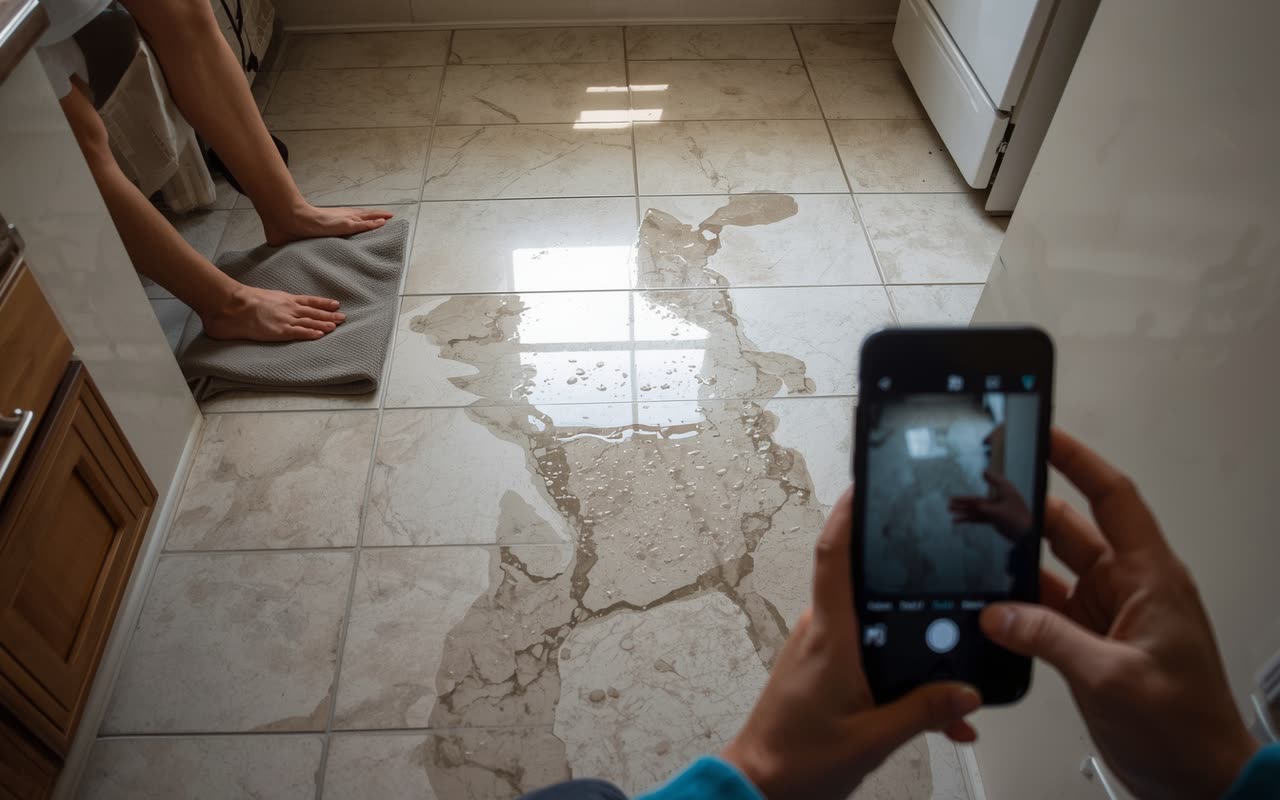
You walk in and the floor is wet. Maybe a pipe let go, a water heater failed, the AC drain overflowed or the roof leaked in a storm. Your first instinct will be to grab towels, and towels are fine, but there is an order to this that saves materials and money. In Tampa Bay the stakes are higher than in a dry climate, because warm, humid air means wet drywall, wood and fabric can start growing mold in about 24 to 48 hours.
This checklist is built around that window. Read it once now, so you have it in your head if the day comes.
The first 15 minutes
1. Stop the water. If a pipe or fixture is the source, close the shutoff valve at the fixture, or close the main shutoff to the house. Know where the main is before you need it. In many Florida homes it is at the front of the house near the hose bib or in a box by the meter. If you cannot find it or it will not turn, call a plumber right away and keep other people out of the area.
2. Think about electricity before you step in. If water is near outlets, lights, appliances, a ceiling fixture or the electrical panel, or if a ceiling is dripping through a light, shut off power to that area at the breaker if you can reach the panel while standing on dry ground. If the panel itself is wet, or you are not sure, stay out and call an electrician or the utility. Water and power can kill.
3. Check the water you are standing in. Water from a supply line is the least risky. If the water came from a sewer backup, toilet overflow beyond the bowl, or flooding from outside, it is contaminated, so stay out, wear boots, gloves and an N95 respirator, and read about flood damage restoration.
4. Keep people and pets out. Anyone with asthma, a weak immune system, small kids or elderly relatives should leave the affected area.
The first hour
5. Photograph and video everything. Take pictures of the source, the water, the damaged materials and the contents before you move them. Wide shots first, then close shots. Do it quickly. This is the evidence for any insurance claim, and your phone's timestamp helps.
6. Start a written log. Open a note on your phone or grab paper. Write down the time you found it, what you think the source is, when you shut it off, who you called and when. Keep adding to it through the day.
7. Call for help in the right order. The order depends on the source:
- If a pipe or fixture failed: call a plumber to stop and fix the source if you cannot shut it off, and call a water damage specialist to start extraction and drying.
- If water came from the roof, AC or outside: call a specialist, and a roofer or HVAC technician for the source.
- Your insurer: call or use the claims line soon, and ask how to file and what they require. Ask before you throw away anything large. A specialist can document the damage and the drying, but the coverage decision is between you and your insurer.
Call early. Water does not wait for business hours, and neither does mold. Tell the specialist where the water came from, when it started, how much area is wet and whether the power is off.
8. Remove standing water. A wet vacuum, a mop and towels will help with small amounts. Do not use a household vacuum. For more than an inch or two, wait for pumps or use a submersible pump if you have one and the power is safe.
Hours 2 to 8: save what you can
Once the source is stopped and you are safe, the goal is to get things off wet surfaces and start water out of the structure.
Move contents. Take small items, rugs, books, papers and electronics out of the wet area. Lift furniture legs onto foil or plastic blocks so they do not stain the floor or wick water. Pull furniture away from walls. Do not drag heavy items across wet carpet or flooring.
Photograph before discarding. Take pictures of anything you remove, and keep damaged items until the insurer agrees they can go, unless they are a health hazard.
What to keep wet and what to separate.
- Keep wet photographs, documents and books together and do not let them dry stacked. Separate them if you can and, if you cannot dry them within a day or two, put them in a freezer bag and freeze them to stop mold until you can deal with them.
- Separate items by material. Wood, fabric, paper and electronics each have different needs. Fabric and clothes can go to the laundry, with hot water, as soon as possible if the water came from a supply line.
- Do not stack wet items in plastic bags or boxes, where mold will grow.
Pull up what holds water. Wet area rugs go outside. If carpet sits over wet pad, a specialist may lift it and remove the pad. Do not try to pull up glued flooring.
Lift baseboards if you can do it without damage, to let air reach the bottom of the wall. Leave heavy work to a professional.
Protect from more damage. Place foil or plastic under furniture legs, put plastic under dripping spots, and move electronics out of the area.
When it is safe to run fans or the AC
Fans: Yes, fans can help move air across wet surfaces once the water source is stopped and power is safe. Use box fans or air movers pointing at wet walls and floors. Note that in Tampa Bay, fans alone do not dry a house when the outdoor air is wet, since they move wet air around. They work well only with a dehumidifier or AC.
The AC: Run the AC if it is working and the ducts and air handler are dry. Cooler, drier air helps. Set it to a normal cooling temperature, and do not blast it very cold, which can cause condensation on surfaces. If the AC drain overflow caused the damage, have the AC repaired before you use it. If the air handler or ducts got wet, wait until a technician has checked them, because a wet system can spread contamination and mold.
Windows: Do not open windows on a humid day. The outdoor air is usually as wet as the inside air, and opening windows lets in more moisture.
Dehumidifier: If you have one, run it in the wet room with the door closed, and empty it often.
Power: Do not run extension cords through standing water or use any device that is wet.
The first night
The first night is when mold begins, if the structure is still wet. Do what you can before bed.
- Check that the source is still off. Look again for drips. Water that kept going overnight can double the damage.
- Run the AC and a dehumidifier, and close doors to the wet rooms so the equipment works on a smaller space.
- Check ceilings. A ceiling holding water can fall in. If it bulges or sags, keep everyone out of that room, and have it released safely or removed by a specialist.
- Keep kids and pets out.
- Do not sleep in a room with wet carpet or a sagging ceiling.
- Add to your log.
If a specialist can come tonight or early tomorrow, that is worth a lot. If not, you have done the main things: stop water, make safe, document, begin drying.
The next morning
Re-check moisture. Touch walls, baseboards, carpets and the bottom of cabinets. Cool, damp or soft surfaces are still wet. Look for new stains, bubbling paint and swelling baseboards. Smell the room.
Meet the specialist. The first visit usually looks like this: they ask what happened, where the water came from and how long it ran, and walk through the house. They take moisture readings with a moisture meter, look at walls and ceilings with a thermal camera, and note the humidity. They identify the category of water, mark what is wet, and explain what must come out (usually wet carpet pad and sometimes drywall and insulation) and what can be dried. They set up extraction, air movers and dehumidifiers, and plan daily readings until the structure reaches the dry reference. Costs depend on the area and materials, and the specialist quotes after seeing the job.
Keep drying. Do not turn equipment off because it is loud. Drying takes days, and the readings, not how the room feels, tell you when it is done. For the process, see water damage restoration and emergency water removal.
Keep a record. Photograph the equipment placement, the readings and any new damage.
What not to do
- Do not wait. A wet house on day two is a bigger job than a wet house on day one.
- Do not turn on power in a wet area or touch a wet panel.
- Do not use a household vacuum on water.
- Do not use space heaters or heat guns to dry walls. They can start fires and can cause cracks, warping and trapped moisture.
- Do not open windows on a humid day and call it drying.
- Do not paint or caulk over damp surfaces. It hides the problem and traps moisture.
- Do not cover wet carpet with furniture or rugs.
- Do not assume a surface that looks dry is dry. Water travels inside walls and under floors, especially in slab houses where it moves sideways.
- Do not throw away items before you photograph them.
- Do not ignore a small leak. Slow leaks have a way of becoming mold problems.
Who to call, in order
- If it is a fire, gas, or you feel unsafe: 911 or the utility.
- Source of the water: shut off at the valve. If you cannot, call a plumber.
- A water damage specialist: to extract water and start drying. See emergency water removal.
- Your insurer: to open a claim and ask what they need.
- An electrician or HVAC technician: if wiring, the panel or the air handler got wet.
- A roofer: if the water came from above.
For a pipe-specific plan, see burst pipe water damage.
If the water came with a storm
After a hurricane, the steps are similar, but power may be out, floodwater may be contaminated, and the specialists are busy. See our guide on mold after a hurricane or flood for a plan that works when you have no power.
The short version
Stop the water, make power safe, photograph, write a log, call the right people, get water out and contents off wet surfaces, dry with AC and dehumidification, not open windows, and get a specialist to read the moisture. If you do these things on day one, most water damage stays a drying job, not a mold job.